House notes
Steel bar furniture for a taproom that runs late and cleans hard
Last call is at one. By half past, the stools are up on the high tops, a mop is going across the floor, and somebody is wiping down the rail with the lights fully on. A taproom or late bar is judged twice a day: once by guests at nine in the evening, and once by the closing crew at two in the morning.
Steel bar furniture suits that double life. A steel base under a high top and a metal frame under every guest gives the room one material from the door to the back wall, and it gives the crew surfaces they can wipe, lift and stack without thinking about it. The trick is to read which pieces are actually steel, because the word on the tag and the line in the record are not always the same.

Open diagram at full size (new tab) ↗
Read the diagram in text
Three cards show a 32-inch square high top for two, a 28 by 71 inch long high top for six, and a steel-frame stool with a 30-inch seat. A side panel works a 30-foot rail: 360 inches, 15 stools at 24 inches or 12 at 30.
- TAPROOM NOTES
- 32-inch square: Two guests, steel base, solid wood top
- 42 IN TALL
- 28 by 71 long top: Three stools a side, six to the table
- STEEL BASE
- Steel-frame stool: Seat at 30 inches for a 42-inch top
- 500 LB
- A 30-foot rail
- 360 inches of rail
- 15 stools at 24 inches
- 12 stools at 30 inches
- Wide stools take the 30-inch slot.
- High tops on steel bases, stools at bar height, and how many fit along a 30-foot rail.
Steel under the high tops
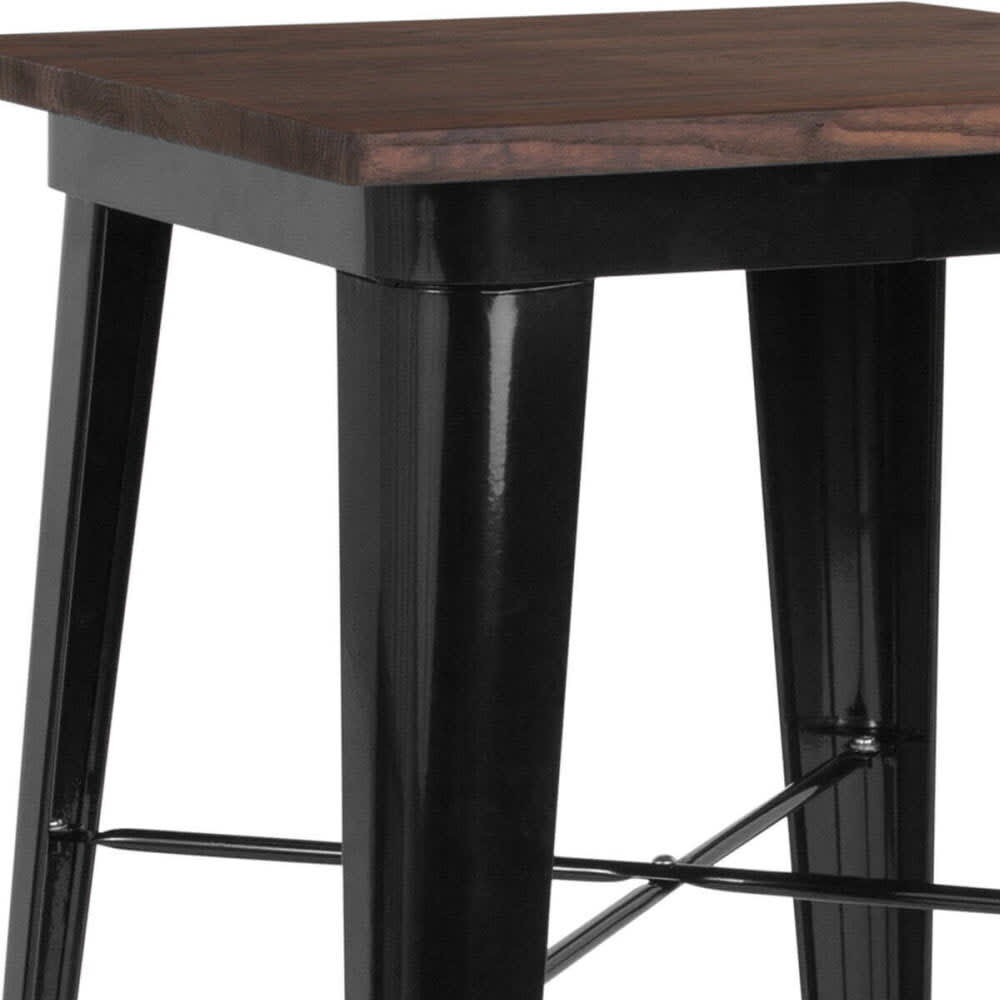
Start with the tables, since they anchor the open floor. Our black steel-base high top in walnut stands 42 inches tall on a steel base, with a solid wood top an inch thick. It comes in four sizes: 24-inch round, 24-inch square, 30-inch round and 32-inch square, from $216. The same table has a silver-framed twin, so a room can run black in the main bar and silver in a brighter side room without changing the top. The family also comes at dining height, 30 inches, so a taproom with a few tables for food in one corner can keep the same base there.
For a crowd that comes in groups, choose a long top. The Industrial Series bar-height wood top with metal frame is 28 by 71 inches of dark walnut on a steel base and weighs 82 pounds, which tells you two people should move it, not one. Our bar-height tables page carries the rest, from a stainless steel top to a pinewood table on a steel base at 25 by 63 inches.
What the stool records actually say
Here is where buyers get caught. Most stools in our industrial bar stools range list their frame simply as metal. That covers the bistro-style stools, the clear-coat frames and the wood-back stools alike. Two upholstered stools list steel by name.
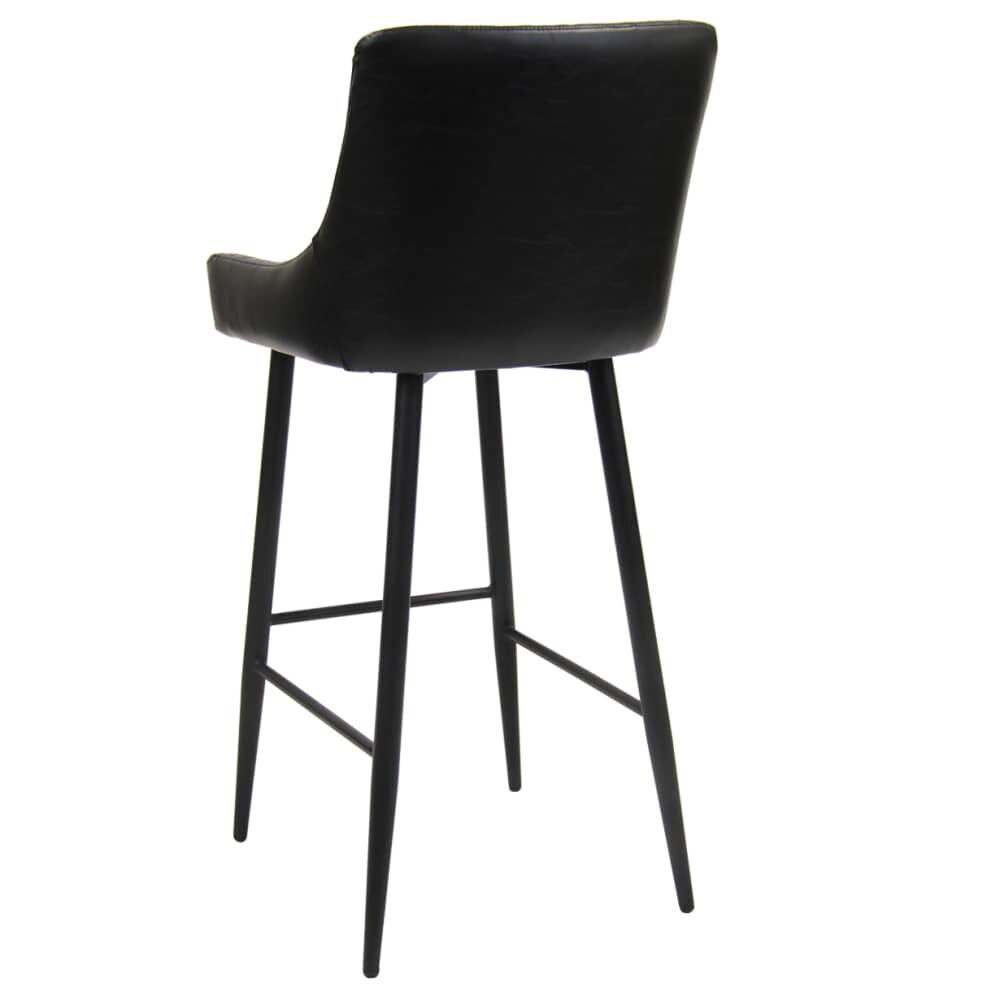
The first is an upholstered bar stool with a diamond-stitch back: a black steel frame, a padded vinyl back and seat, 21 inches wide, 18 deep and 42 tall, rated to 500 lb, at $200. The second is a brown vinyl bar stool on a black steel frame, with a padded back, a 30-inch seat height and the same 500 lb rating, at $177.
Does it matter? For the look, a metal frame and a steel frame in black read the same across a room. For a specification that calls for steel in so many words, only those two records answer it. Read the frame line before you promise anyone a material.
Sizing a taproom floor and rail
Say your taproom has a 30-foot bar and an open floor in front of it. Thirty feet is 360 inches of rail. Stools want 24 to 30 inches each from center to center, so the rail seats 15 at the tight end and 12 at the generous end.
Width settles which end you need. A 21-inch upholstered stool in a 24-inch slot leaves three inches between frames, and on a crowded Saturday that means guests climbing past each other's knees. Give the wide stools the 30-inch slot and seat twelve. A narrower bistro-style stool can take the 24-inch slot and seat fifteen.
On the floor, set ten of the 32-inch square tables for two guests each and four of the 28 by 71 long tops with three stools a side. That is 20 seats at the squares, 24 at the long tops and 12 at the rail: 56 stools in all, every one of them at bar height.
Fourteen tables and 56 stools clear our eight-piece minimum many times over. Every size and every finish counts as a separate line, so two sizes of the same table are two lines; name them that way in the plan and nobody at receiving confuses the squares with the long tops.
The mistake that leaves guests with their knees up
It sounds obvious, and it still arrives on pallets. A high top stands about 40 to 42 inches tall, and the stools for it should seat guests about 29 to 31 inches up. Counter stools sit lower, around 24 to 26 inches, for a counter of 34 to 36 inches. Order counter stools for 42-inch high tops and every guest sits with the table at chest height.
The way to avoid it is plain. Check the seat height in the record against the table height before an item goes into the plan. Where a record gives only the overall height of a stool, ask us for the seat height before you order. The brown steel-frame stool above lists 30 inches, which sits right in the band for a 42-inch top.
What the closing crew will thank you for
Vinyl seats and metal frames wipe down quickly, and a backless or low-back stool goes up onto a high top in one move when the floor needs mopping. Solid wood tops ask for a little more thought. Wood moves naturally with the seasons, and that movement is outside our warranty, as is damage from the wrong cleaning agent. Solid wood tops carry six months of warranty and table bases a year; our warranty page lists the rest.
The industrial furniture collection gathers chairs, stools, tops and bases in one place, which makes it easier to keep the dining room in the same family as the bar.
One plan for the rail, one for the floor
Open two plans in venue plans: one for the bar rail and one for the open floor of high tops. Note the rail length and slot in the first, the table count and stools per table in the second, and the seat height beside every stool line.
If the room is brighter and wants chrome or silver, read our guides to metal silver bar stools and the retro bar table and stools before you settle. For a counter with a diner feel, diner bar stools is the right next page. Then stand at the far end of the room at closing time and count how many stools your crew will lift that night.