House notes
Giving a bucket seat bar stool its room along the rail
Late on a Friday, the guests still at the bar are the ones who settled in. They came for one drink and stayed for three, and the stool under them has a lot to do with it. A bucket seat curves up around the hips and back, so a guest sits in the stool rather than on it.
That curve takes space. A wraparound seat is wider and deeper than a flat one, and a bar fitted with bucket stools seats fewer guests than the same bar fitted with backless or ladder frames. Plan for that from the start and the room works; discover it on delivery day and it does not.

Open diagram at full size (new tab) ↗
Read the diagram in text
Three cards compare bucket stools: a narrow swivel at 18 1/8 inches on 24-inch centers, a wide swivel at 25 3/4 inches on 30-inch centers, and a fixed stool at 18 3/4 inches. A side panel works an 18-foot bar: 216 inches of rail, nine narrow stools or seven wide ones.
- BUCKET SEAT NOTES
- Narrow swivel: 18 1/8 inches wide, seat at 30 1/4
- 24 IN SLOT
- Wide swivel: 25 3/4 inches wide, 26 inches deep
- 30 IN SLOT
- Fixed bucket: 18 3/4 inches wide, seat at 29
- 24 IN SLOT
- An 18-foot bar
- 216 inches of rail
- 9 narrow stools
- 7 wide stools
- Keep at least four inches clear between seats.
- On an 18-foot bar, a narrow bucket stool seats nine and the widest seats seven.
What the curve costs in inches
Our bucket bar stools run across a wide band of sizes, and the spread is the first thing to understand.
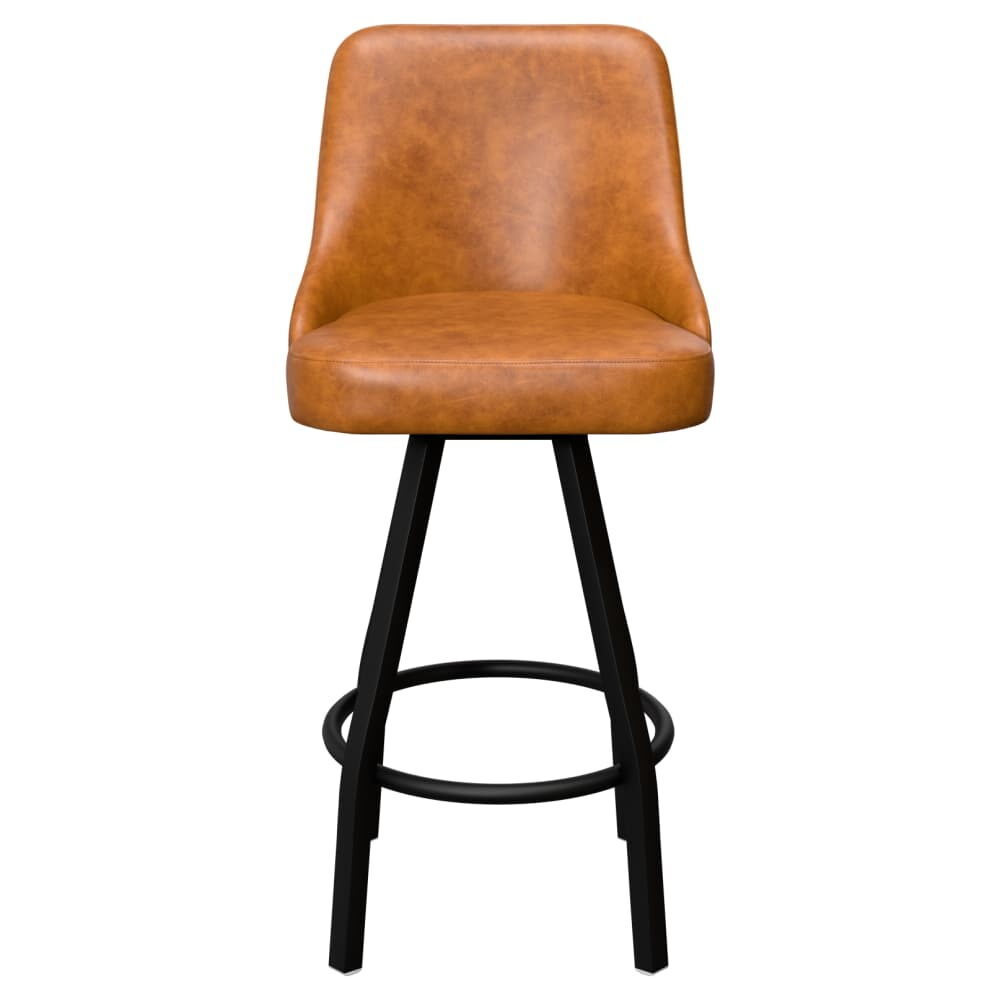
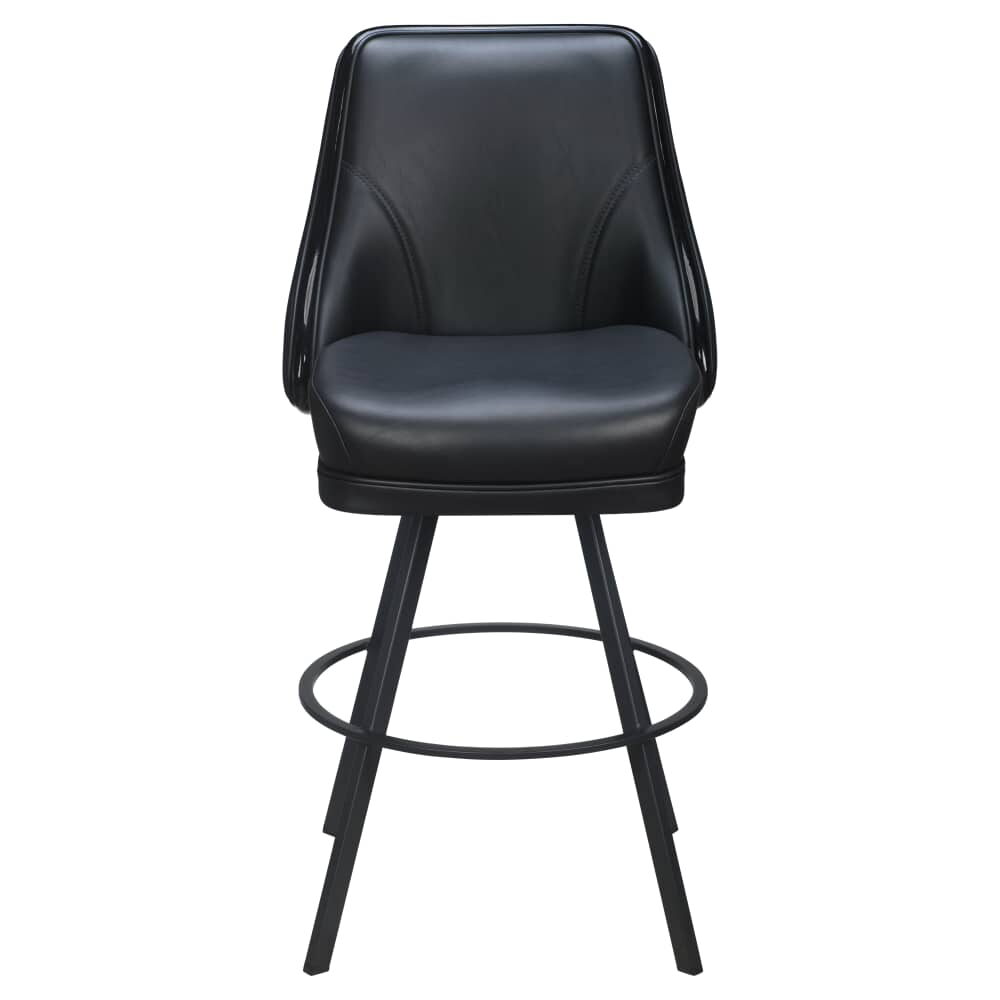
At the narrow end sits the Mauro bucket swivel bar stool. Across the seat it measures 18 1/8 inches, front to back 20 7/8, and the seat rides at 30 1/4 inches. At the wide end, the wide bucket swivel stool on a circular frame measures 25 3/4 inches across and 26 inches deep, seat at 30 3/4. Between those two there are more than seven inches of width per stool.
Seven inches sounds small until you multiply it by a bar. Across ten seats it adds up to more than six feet of rail.
Counting seats on an 18-foot bar
Each bar stool claims a slot of 24 to 30 inches, counted between seat centers. The width of the stool tells you which end of that range you can use.
Take a straight bar with 18 feet of usable rail, which is 216 inches. With the Mauro on 24-inch centers, nine stools fit, and each pair has 5 7/8 inches of open space between seat edges. Now swap in the 25 3/4 inch stool. On 24-inch centers the seats would overlap, so it has to go on 30-inch centers at least. That gives seven stools, and even then only 4 1/4 inches separate one wide seat from the next.
So the wide stool costs two seats on this bar and still sits closer to its neighbor than the narrow one does. Here is the rule we hold to: subtract the stool's width from the slot you plan to use, and if fewer than four inches remain, the slot is too tight for a bucket seat.
Depth and the aisle behind the bar
Width is only half the footprint. A bucket seat also reaches back further than a flat one, and the back of the stool is where the room's traffic flows.
The wide circular-frame stool is 26 inches deep. A guest sitting in it pushes back from the bar when standing up, and the room needs about 18 to 24 inches behind a seat for that. Behind that, staff and guests need a path to walk. A service aisle of about 36 inches is the planning figure we use.
Add those together and a bucket stool line can claim close to seven feet from the bar's face to the next obstacle: 26 inches of stool, 18 or more of pull-back space and 36 of aisle. Measure from the bar's edge to the nearest high-top or wall before you settle on the deepest frames. If the answer is under that, choose a shallower bucket, like the 20 7/8 inch Mauro, or set the high-tops further back.
Swivel or fixed
Most bucket stools in our range swivel, and on a bar that matters more than it does at a table. A guest in a deep seat cannot easily shuffle a stool sideways, so a seat that turns lets them face a friend, the screen or the room while the base stays in its slot. Our swivel bar stools collect them all.
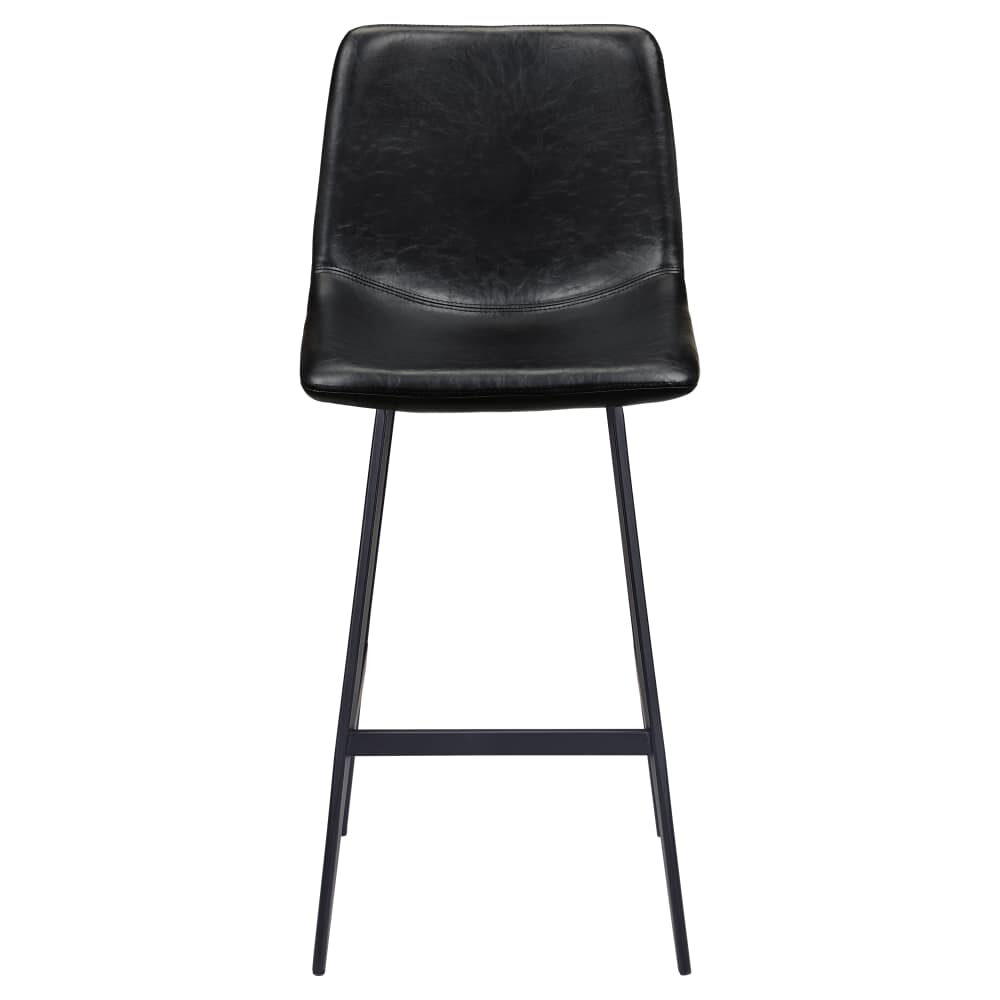
Some rooms prefer the fixed frame. A guest on a fixed seat faces the bar and the bartender, which suits a cocktail bar where the drinks are the show. The black bucket bar stool is a fixed example, 18 3/4 inches wide with a 29-inch seat and four vinyl colors, including dark brown and London tan.
Warranty follows that choice. A metal stool that does not swivel carries seven years under our limited warranty; a swivel metal stool carries one. Weigh that against how the bar is used, and read the full terms on the warranty page.
Vinyl, made to order and the swatch
Bucket seats in our range are upholstered, and nearly all are covered in vinyl, which wipes clean between services. Some frames give a short list of stock colors. The Mauro, for one, offers a stock vinyl list and a made-to-order vinyl choice.
Pick from the listed colors and the stool is a standard item, ready in 14 to 21 business days plus transit. Choose upholstery outside those lists and it becomes a custom line. Custom lines take longer, up to about eight weeks, and after we confirm one, it stays on the order: no cancelling it, no sending it back. That is the mistake to avoid: settling on a special-order vinyl for twenty stools without realizing the order can no longer change.
Before you decide either way, ask for free upholstery samples. Hold the vinyl against the bar top and the floor in the evening light, because vinyl chosen by daylight can turn darker or warmer under the bar's pendants.
Pairing the bar with the rest of the house
A bucket line at the bar often sits beside a dining room that shares the curve. Our upholstered bar stools include several frames with dining chair partners, so the shape repeats across the room.
If you are deciding between frames for a long rail, our notes on ladder back bar stools cover the lighter, narrower choice. For the figures on a stool record, the piece on heavy duty commercial bar stools explains capacity and frame. And if the bar is really a diner counter, see diner bar stools.
Painter's tape on the bar before the order
Set up the bar as its own plan in venue plans and write the rail length, the slot and the stool count in its notes. Keep the depth figure beside them: bar edge to the nearest obstacle.
Then mark the slots on the bar's front with painter's tape, every 24 or 30 inches, and set a chair in each of the first three to stand in for the stools. Walk behind them carrying a tray. If you brush the backs, the deeper frames are the wrong choice for that rail.