House notes
Reading the record behind heavy duty commercial bar stools
Operators search for heavy duty commercial bar stools because they have watched a cheap stool give out in the second year. That is a fair worry. The word on a listing, though, tells you nothing about the stool. Two lines on its product record tell you a good deal.
The first is the listed weight capacity. The second is the frame material. Read those two before the photograph, the price or the color, and you will know which stools in a range belong at a busy bar and which belong somewhere quieter.

Open diagram at full size (new tab) ↗
Read the diagram in text
Three cards name the lines to read on a bar stool record: listed weight capacity, frame material and the stool's own weight. A side panel lists the warranty periods by frame: seven years for fixed metal, one year for swivel metal, one or three years for wood.
- STOOL RECORD NOTES
- Weight capacity: Our stool records list 500 or 400 pounds
- Frame material: Metal, wood, resin or aluminum frames
- The stool's own weight: 12 stools at 30 pounds is 360 pounds to lift
- Warranty by frame
- Fixed metal: 7 years
- Swivel metal: 1 year
- Wood: 1 or 3 years
- Each product page states its own period.
- Capacity, frame and the stool's own weight tell you how a bar stool is built and how it will be handled.
Two figures before anything else
Every stool page in our range carries a specification block. Look for the line marked weight capacity. Across our bar stools, the records list either 500 pounds or 400 pounds, and that single figure sorts the range more cleanly than any label.
Then look at frame material. Metal, wood, metal with a wood back, resin and aluminum all appear. The frame decides more than the look: it sets the warranty period, which we come back to below, and it hints at how the stool will travel between the bar and the storeroom.
What you will not find on our stool records is a certification line. When a product carries one, its page says so; for stools, compare on capacity and frame. A stool whose page shows no capacity line at all is one to ask us about by email before it goes on an order.
When two stools look alike
Here is where reading the record pays. Some stools in our range come in versions that look nearly identical in a photograph and list different capacities.
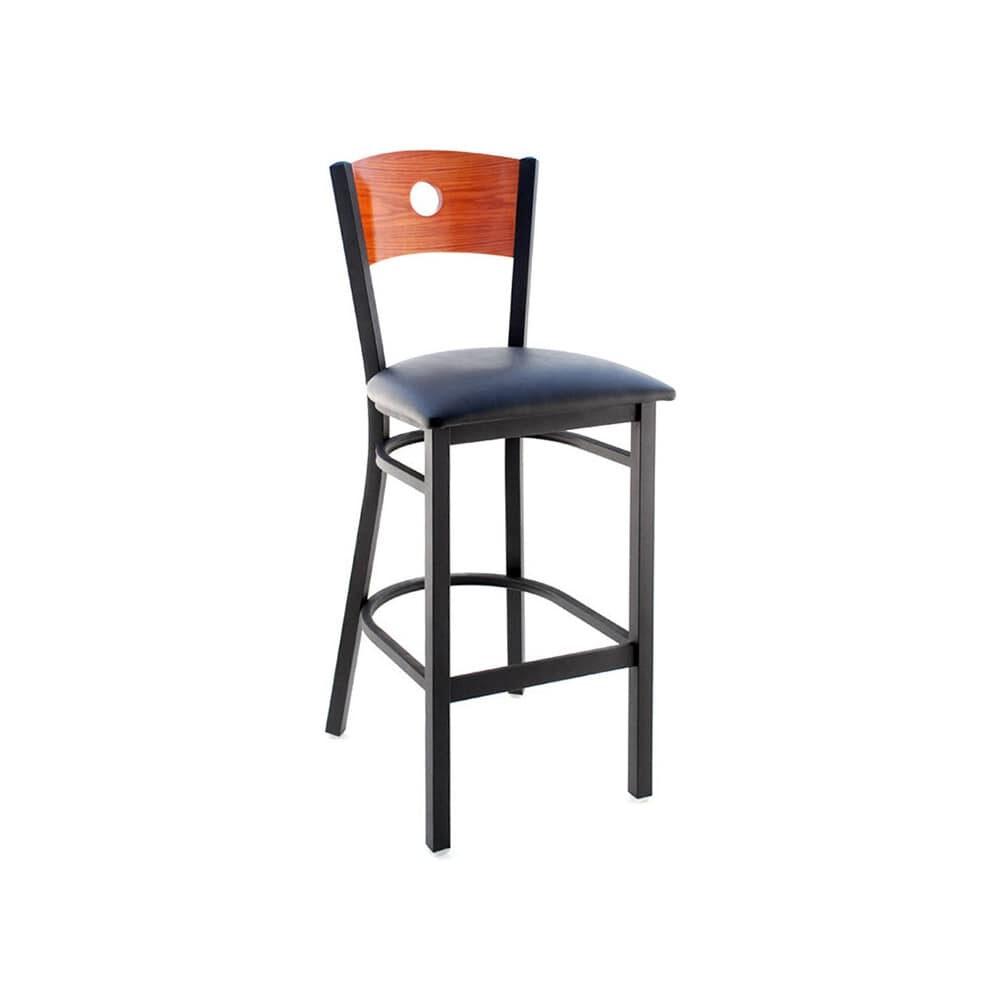
Take the metal stool with an interchangeable wood back. Its record gives a height of 42 inches, a width of 17 1/4 and a depth of 19, and the capacity line reads 500 pounds. A silver-frame version of the same shape, at the same three dimensions, lists 400. On a product grid the two would pass for twins.
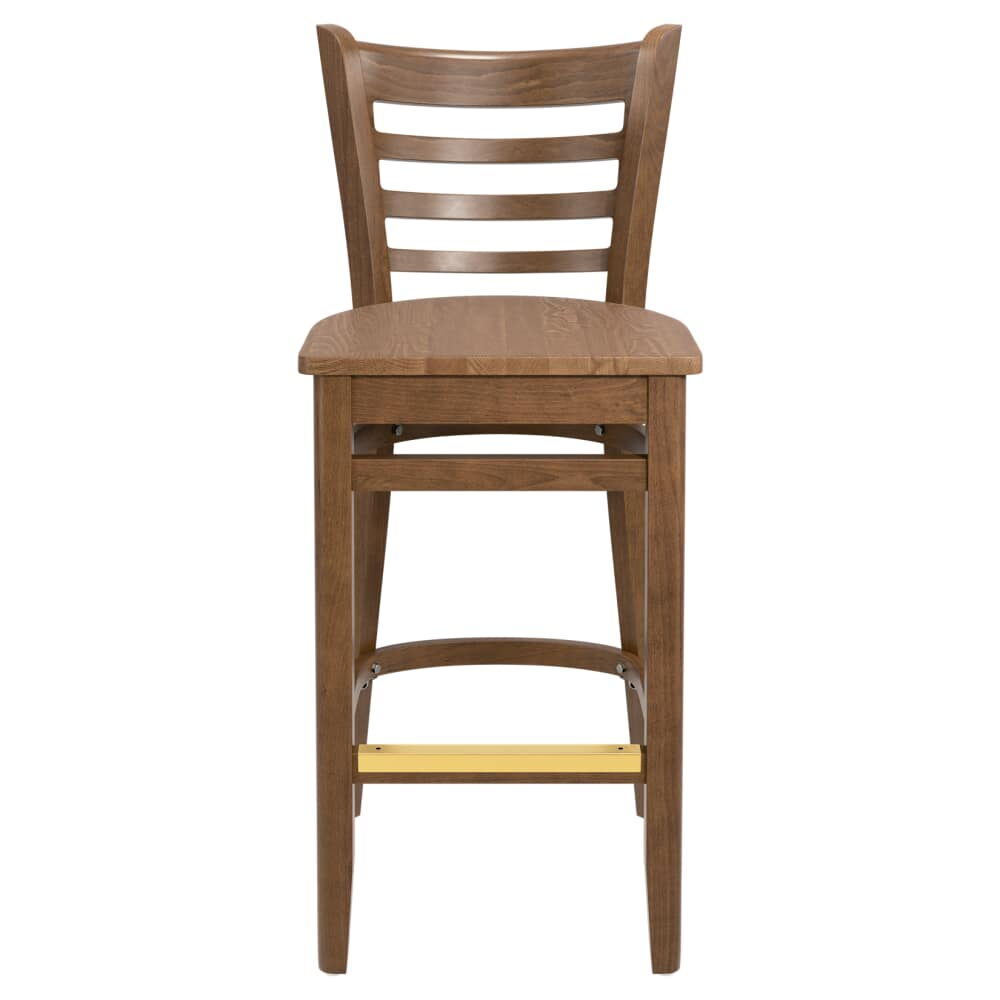
Wood does the same. The ladder-back wood bar stool lists 500 pounds on a frame 42 1/2 inches high and 17 across. A second wood ladder back of almost the same size, 17 inches by 19 1/2 by 42 1/2, lists 400. If your bar sees a crowd on match nights, that difference is the line to read, and it sits one scroll below the photograph.
So the mistake buyers make is choosing from the image and the price, then discovering the capacity after the order is confirmed. Open each stool's page, copy its capacity into your notes beside the name, and compare the column, not the pictures.
Frame material and the warranty that follows it
Our limited warranty runs by frame type, and the gap between periods is wide enough to matter in a decision.
- Metal stools that do not swivel: seven years.
- Swivel metal stools: one year.
- Wood stools: three years on selected models, one year on the rest, with each page giving its own figure.
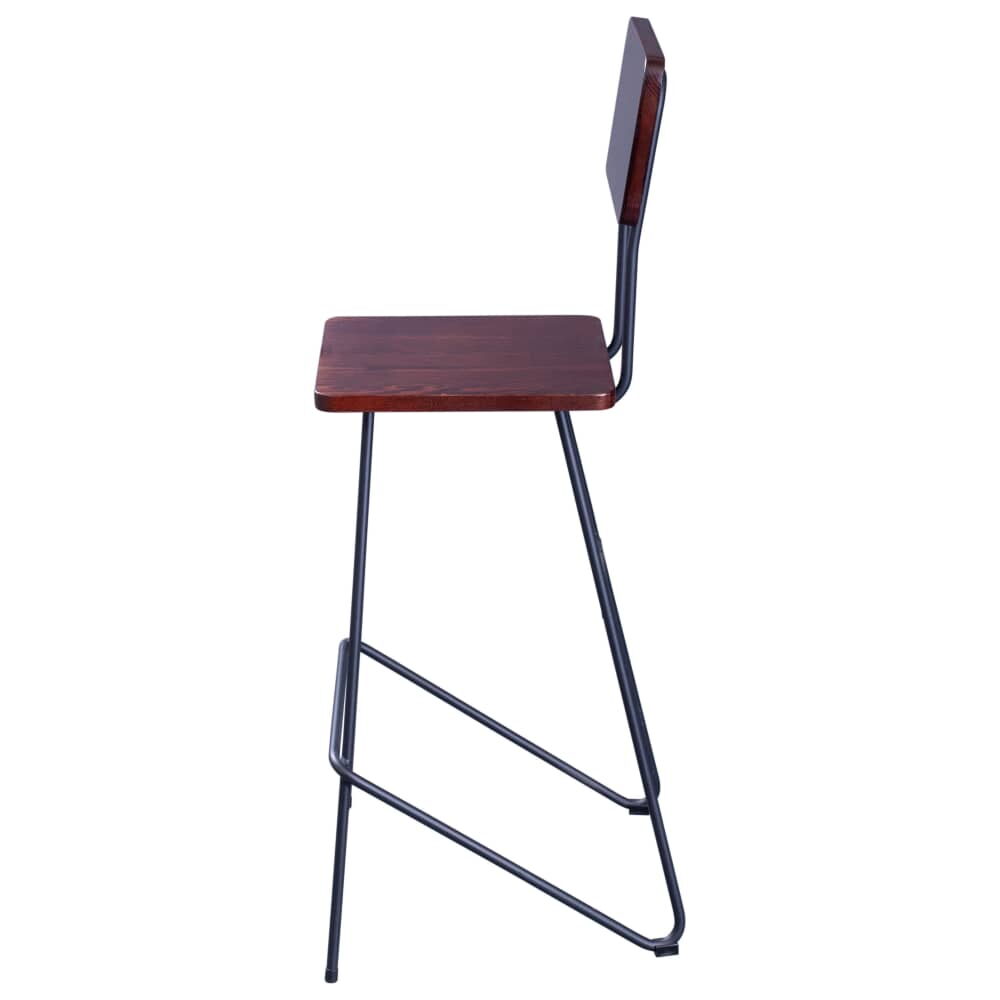
A fixed metal frame therefore carries the longest period we offer on any stool. The metal bar stools and the industrial bar stools are the places to start when that matters most. The square-back metal bar stool is one example: a metal frame with a solid wood seat, 14 inches wide and 43 inches tall, listed at 500 pounds.
Remember what the warranty covers. It answers a fault in the stool's build or its materials that was there the day it arrived, for the business that bought it and used it the way a bar does. Misuse, harsh cleaners and the wear of years sit outside it. Read the exclusions on our warranty page before a claim ever comes up.
The stool's own weight
Capacity tells you what a stool holds. The line marked weight tells you what your staff will lift.
That figure matters at close. Say the closing crew turns twelve stools up onto the bar top so the floor can be mopped. Twelve stools at 22 pounds each is 264 pounds lifted and set down every night. Twelve at 30 pounds is 360. The metal ladder back in our range weighs 22 pounds; its wood counterpart weighs 30. Neither is wrong, but a room that mops every night feels those 96 pounds by the end of the week.
The light end of the range is resin. Our resin bar stool weighs 13 pounds and stacks, and its record allows both the dining room and the patio. The seat rides at 29 1/2 inches; capacity is listed at 400 pounds. For a terrace bar that is carried in when the weather turns, that combination suits the job. Browse the full bar stools range by frame to compare weights side by side.
A short worksheet for the whole house
A house with a main bar, a terrace bar and a private room will often want different stools in each. A worksheet keeps that sorted. For every stool you shortlist, write down four things from its record: weight capacity, frame material, the stool's weight, and the warranty period that follows from the frame.
Here is the rule of thumb we hand to a general manager: for the busiest rail in the house, start from a fixed metal frame listed at 500 pounds, then move to wood or swivel seats only where the room asks for them. A quiet lounge corner can trade a few years of coverage for a swivel or a warmer wood frame. The front bar on a Saturday night is the wrong place to make that trade by accident.
If the bar is long and the backs need to stay light, our notes on ladder back bar stools compare metal and wood rungs. For a softer, wraparound seat, see the piece on bucket seat bar stools. And for a members' bar, the club bar stools article works through arms and padding.
Where the figures go next
Put each room's shortlist in its own plan in venue plans: main bar, terrace, private room. Paste the four figures into the notes for every line, so whoever reviews the plan later sees capacity and frame without opening a page.
Then pull one sample stool of each frame you are considering and ask the closing crew to lift it onto the bar top. Their answer, together with the capacity line, will settle most of the choice.