House notes
Contract furniture is a promise about use, so read the record before you order
Anyone who has opened a second venue has heard the phrase a hundred times. Contract furniture, contract seating, contract grade. It sounds like a stamp on the carton, a seal that settles the question before the order goes in.
It is nothing of the kind. Contract furniture means furniture meant for commercial rooms, where strangers sit down all day, every day, and staff drag chairs across a floor at closing. The word describes a use. What a given piece can actually do for your room lives in its product record, line by line, and that record is where we send every buyer before an order is confirmed.

Open diagram at full size (new tab) ↗
Read the diagram in text
Three numbered cards: capacity and materials, usage indoor or patio, and certification only where its own page shows it. A note bar gives the warranty difference between solid wood tops and other indoor tops.
- READING THE RECORD
- 1
- Capacity, materials: 400 lb or 500 lb, frame and seat as listed
- 2
- Usage: Indoor or patio, exactly as the record says
- 3
- Certification: BIFMA only where that one record lists it
- Warranty follows the type: solid wood tops 6 months, other indoor tops and bases 1 year.
- Three lines in every product record decide what a piece can do for your room.
What the word covers, and what it leaves open
Start with the part that holds. Our warranty is written for the original purchaser and for normal commercial use, which is the plain meaning of contract: a promise about the kind of room, not about any one feature.
The word leaves a great deal unsaid, though. It does not tell you whether a chair belongs on the terrace or only inside. It says nothing about a certification or any other standard. It does not tell you how much weight a stool is rated for, or how long the warranty runs on a tabletop versus the base under it. Each of those answers sits in a different line, and they differ from one piece to the next.
Four lines in every record
Before a chair, stool, table or booth goes into a plan, read four things on its page:
- Weight capacity, which our seating records list at 400 lb or 500 lb
- Frame and seat materials, because they decide the cleaning and the warranty period
- Usage, indoor or patio, in the page's own words
- Certification, which appears only on the pages that carry it
Then open the warranty page and find the type. Metal chairs and stools that do not swivel carry seven years. Booths, table bases and indoor tables with tops that are not solid wood carry one year. Solid wood tops carry six months. A dining room built from all of those carries several warranty periods at once, and a GM who knows that in advance is not surprised later.
Where certification appears, and where it stops
Here is a fact from our own catalog that surprises people. The records that list BIFMA certification are all wood chairs. Not every wood chair, and none of our stools, booths or tables.
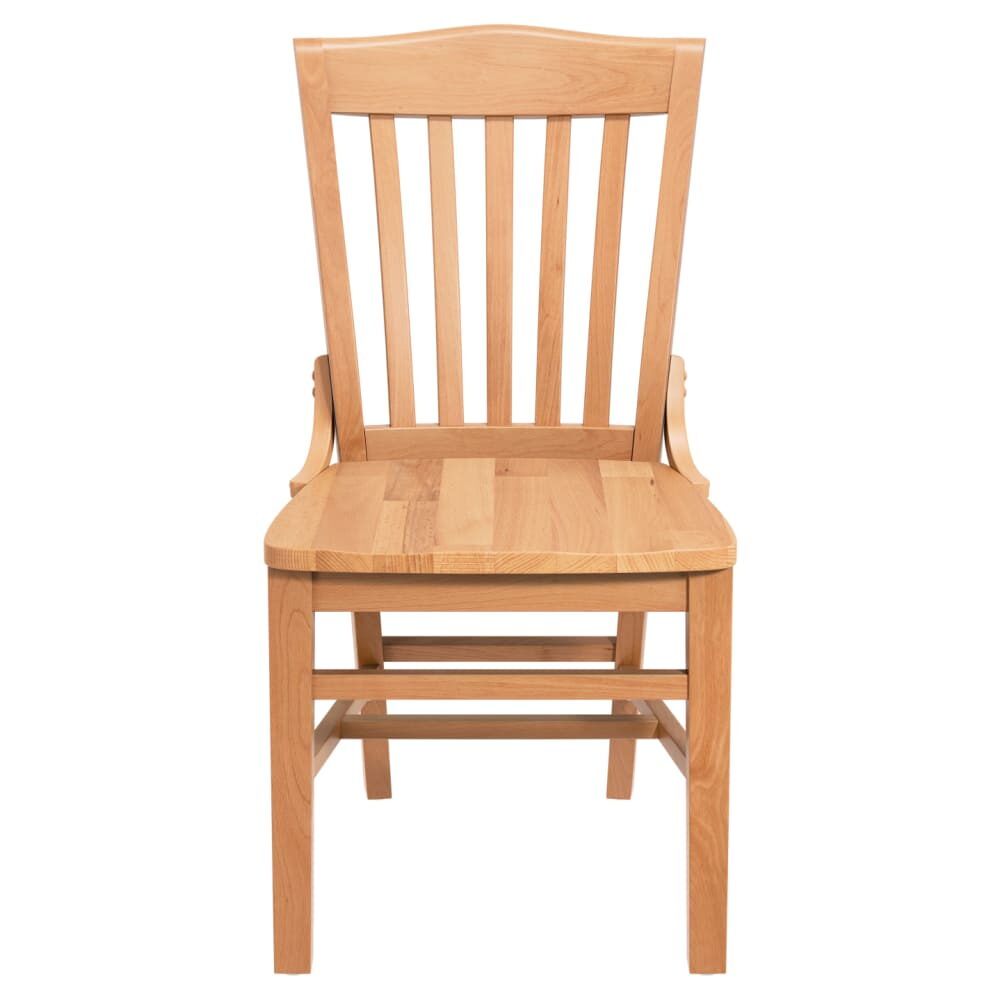
Take the slat-back wood dining chair. Its record lists BIFMA certification, a 500 lb capacity, and a frame 17 1/4 inches wide, 20 3/4 deep and 34 tall. The wood schoolhouse chair lists certification too. Its bar stool partner, same frame family and same finishes, does not. So when a dining room and its bar are ordered as a set, the certificate covers the chairs in the room and stops at the rail.
That gives you the rule of thumb we use ourselves: a claim belongs to the item whose record carries it. Never carry a line from the chair to the stool, or from one finish to another, because the record is written for one product.
A dining room read through the records
Say you are furnishing a full-service dining room of 1,800 square feet. Early planning gives each seat in a room like that 12 to 15 square feet, so somewhere between 120 and 150 seats. Local codes for occupancy, fire and access come first, and the final count is your architect's or designer's call. Choose the roomier end, 15 square feet, and you plan 120 seats.
Seat them at 30 four-tops. A 36-inch square top seats four, so that is 30 tops, 30 bases and 120 chairs. Use the slat-back chair above, starting at $104 each, and the chairs alone begin at $12,480 before freight. Now read the warranty for the tables. A solid wood top carries six months. A laminate top on the same base carries a year. That difference is worth knowing before you choose the top, not after.
The mistake of buying the word
The costly error is to read contract as a promise about every room. A buyer sees commercial seating, orders indoor wood chairs for a covered terrace, and finds by August that the seats have faded and the joints have swelled. Indoor furniture used outdoors is outside the warranty. The terrace needed pieces whose record says patio.
The second version of the mistake shows up in returns. Stock pieces can come back, but a 35% restocking fee applies, and freight runs both ways at your cost. Forty of those $104 chairs come to $4,160 of furniture, and the fee on that alone is $1,456. Reading the record first is cheaper than reading it after the pallets arrive.
Booths, tables and the rest of the house
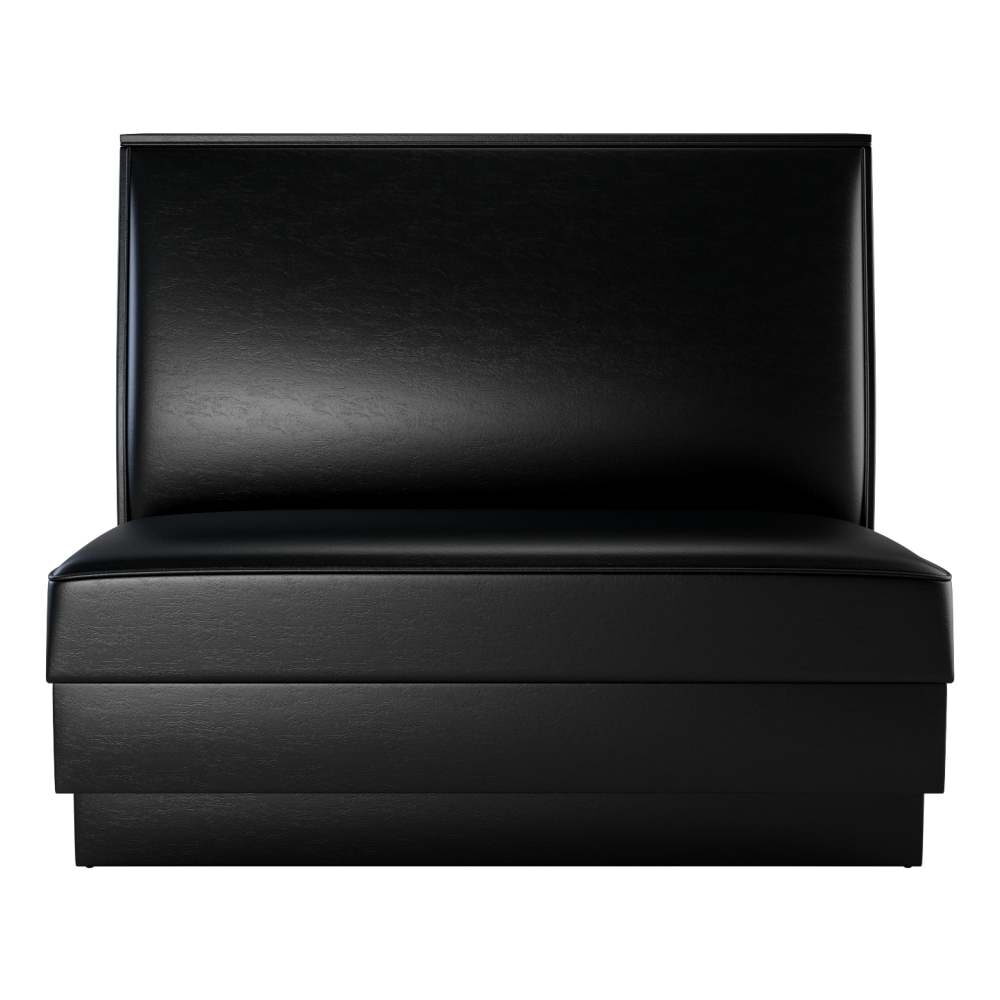
Booths have records of their own, and they read differently. The plain-back booth lists three back heights, 36 inches, 42 inches as the standard and 48 inches, a back in fabric or vinyl over a padded vinyl seat, and an optional power package: two outlets, one USB port and one USB-C port. Booths also sit outside our eight-piece minimum, which covers tables and chairs in any mix.
From there the house fills in by room. Dining chairs for the main floor, tables and bases matched to the covers you counted, booths along the wall. For a room that changes between lunch and a private event, our stacking chairs list stacking in the record, so that line is answered before you ask. Our overview of hospitality furniture walks through each room, and club furniture and cafeteria tables go deeper into two of them.
Putting the record in front of a person
Build a plan for each room in venue plans, and write the room's real use in the notes: covered terrace, banquet room used three nights a week, campus dining hall. Those notes travel with the order, and a person on our side reads every order before we confirm it. Nothing is charged when you submit it.
If a line in a record is unclear, or your project needs something the record does not list, book a call through talk to a specialist. We call Monday to Friday in Central time windows, morning, midday or afternoon, and if the call cannot connect we write within one business day. Have the plan open when we ring.