House notes
Folding cafeteria tables for a hall that turns into an event room by six
At noon the dining hall is long rows, trays and a queue at the servery. By six the same floor might hold a banquet for ninety, a lecture with chairs in rows, or nothing at all while the floor is mopped. Folding cafeteria tables are what let one room do every one of those jobs without a second room full of spares.
We furnish halls like this alongside restaurants, bars and clubs. The question that matters is rarely which table is toughest. It is how many tables stay up, how many come down, and where the folded ones live until morning. Answer that and the top, the size and the base follow quickly.

Open diagram at full size (new tab) ↗
Read the diagram in text
Three numbered cards. Lunch: twenty 30 by 96 inch tables seat 160. Evening: twelve tables seat 96. Difference: eight tables fold and go to storage. A note says the difference between the two layouts is the folding order.
- DINING HALL RESET
- 1
- Lunch layout: Twenty 30 x 96 inch tables Eight seats each, 160 in all
- 2
- Evening layout: Twelve tables stay up Ninety-six guests at dinner
- 3
- The difference: Eight tables fold away Plan storage for those eight
- The tables in the busy layout and missing from the light one are the folding order.
- Plan the lunch room and the evening room, then buy folding tables for the difference between them.
What the folding range holds
The folding tables we carry are a short list, which makes them easy to read side by side.
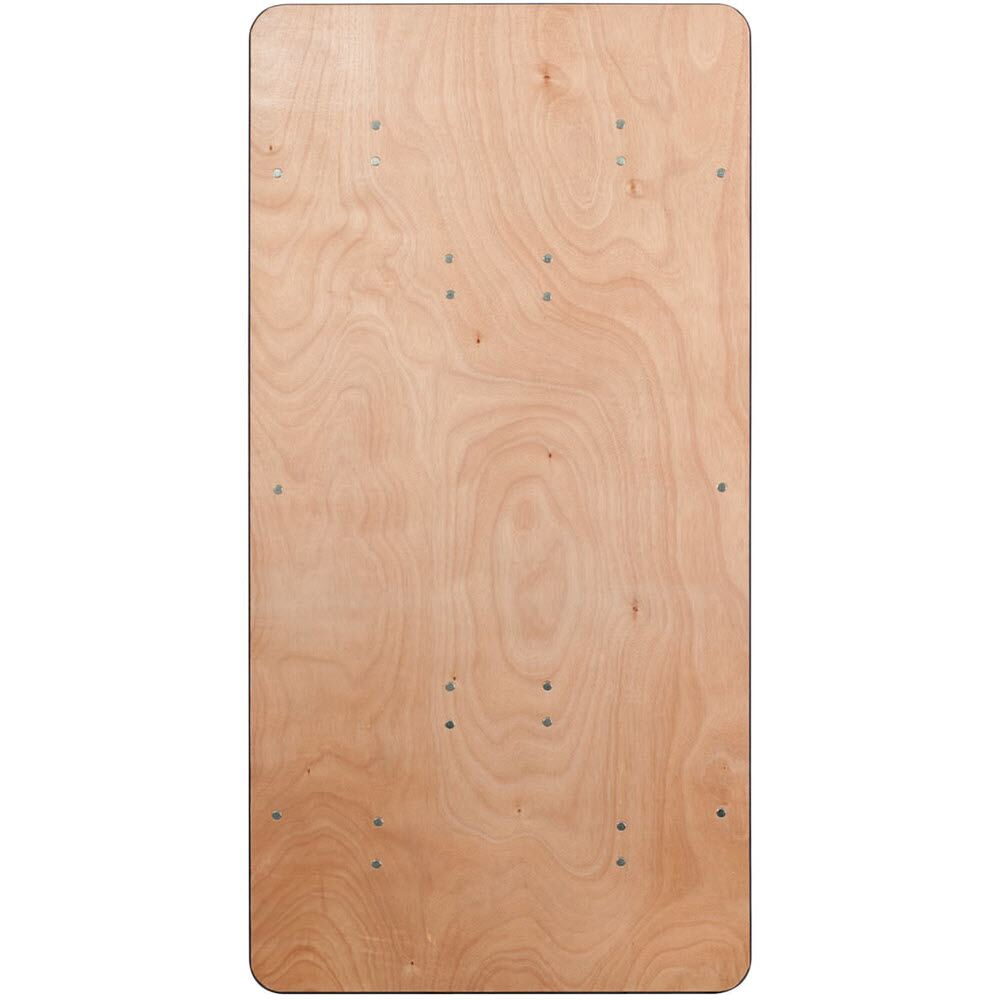
The folding wood dining table is a rectangle on a steel base, 30 inches high, with a wood top 1/2 inch thick in a natural finish. It comes 30 by 60, 30 by 72 or 30 by 96 inches. Its record lists it for indoor use only, so if the hall opens onto a courtyard for summer events, this one stays inside.
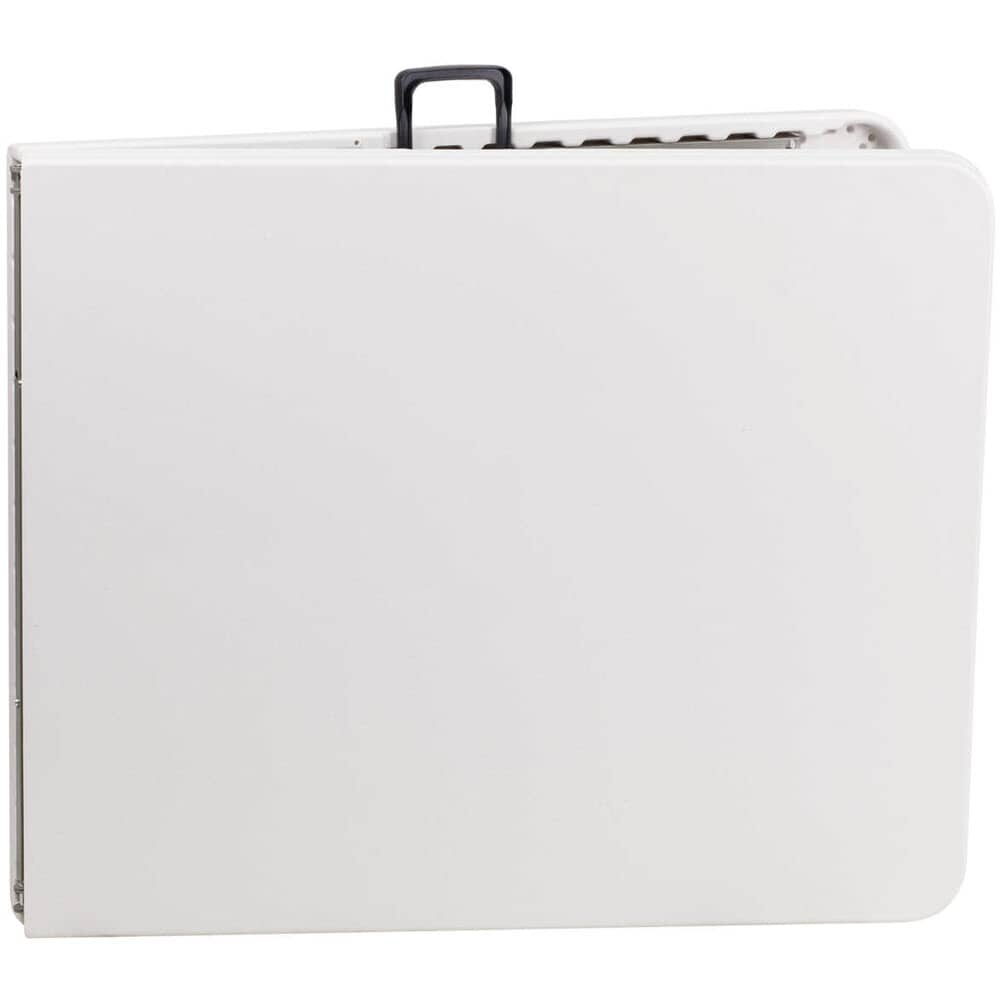
For a venue that sets up outdoors as well, the folding polymer dining table is cleared in its record for the patio as well as indoors. The plastic top is 1 3/4 inches thick with a white granite look, the base is steel, and the height is again 30 inches. Alongside the same three long sizes it adds a 34 by 34 inch square.
Smaller rooms have a third choice. The metal folding table with base sets a steel top on a cast iron base, either round at 30 inches across or square at 30 by 30, in black or red, and its record gives a weight of 30 pounds. A bar-height version at 42 inches is listed too, which suits a reception that wants guests standing for the first hour.
Counting the lunch room, then the event room
Say the hall serves lunch at 30 by 96 inch tables. Give each diner roughly 24 inches of table edge and each long side holds four people, so one table seats eight. Twenty tables give 160 seats at noon.
The evening booking is a seated dinner for 96. Twelve tables carry it, because 12 times 8 is 96. That leaves eight tables to fold and clear. Eight is the number to plan storage around, not twenty, unless some evenings call for an empty floor.
Run it the other way for a hall that clears completely. Twenty polymer tops at 1 3/4 inches each come to 35 inches of top alone, before any leg frame is counted. Whatever closet or alcove takes them has to take that stack, so measure it before the order goes in.
Here is the rule we give every dining hall manager. Buy folding tables for the gap between your busiest layout and your lightest one, and let the rest be fixed tables that never move. Those fixed positions can be sturdier pedestal pieces, covered in our notes on choosing cafeteria tables for daily service.
Sizes and the jobs they suit
The long sizes split the hall's work neatly. A 30 by 96 inch table is the row table for lunch and for banquets. At 30 by 72 inches, three people fit on each side at 24 inches apiece, six in all. The 30 by 60 inch table seats four at that spacing, or six at the tight 18 inches some halls accept for a short lunch period.
Squares and rounds do other jobs. A 34 by 34 inch square sits between the 30 inch square that seats two with room for plates and the 36 inch square that seats four, and it serves four well at a staff meal. The 30 inch round is a coffee station or a spot for two. For rounds sized for groups, our guide to round cafeteria tables does the counting.
Every table here stands at 30 inches, which is ordinary dining height. For accessible seats, the 2010 ADA Standards set a surface range from 28 up to 34 inches (section 902.3) and want 5 percent or more of the seats at those surfaces (section 226.1). In the 160 seat lunch room, that means eight seats or more. Your architect should confirm the current text and the local code for the building.
When you keep the tops and fold only the legs
Some halls already own good tops and want legs that fold. The black folding aluminum table base weighs 36 pounds and is listed in three footprints: a cross 26 inches each way, a T measuring 30 by 23, and a longer cross of 19 by 36 inches. Heights are 28 inches for dining and 41 for the bar. The silver folding aluminum table support is an X-prong base at 28 inches, in 22 by 30 or 27 by 27 inch sizes. Both carry indoor and patio listings.
Match the spread to the top. Under a round, a base spanning less than two thirds of the top's width leaves the edge unsupported; a 36 inch round needs 24 inches of spread, and the square cross clears that with room to spare. The wider range of table bases, and the taller ones for standing receptions, is covered in our piece on the bar-height table base.
The mistake that stalls a changeover
Halls buy folding tables, then keep chairs that neither fold nor stack. The tables come down in ten minutes and the chairs take the rest of the hour. Pair the folding pieces with stacking chairs or folding ones so both halves of the floor clear at the same pace.
One caution about the courtyard. The warranty does not cover indoor pieces carried outdoors, so anything not listed for patio use stays under the roof.
Two plans before the first booking
Open venue plans and make one plan for the lunch room and a second for the evening room, each with its tables and chairs. Copy the pair if a second campus or building runs the same way, and download the sheet to hand to the person approving the spend.
The order itself is simple. Tables and chairs together need eight pieces in any mix, standard pieces sit on a clock of 14 to 21 business days ahead of transit, and freight arrives at the dock or tailgate. The delivery terms explain the liftgate and inside delivery you can book with the order. Then count the tables that appear in the lunch plan and not in the evening one. That number is your folding order.