House notes
Which rooms want wood restaurant booths, and which want upholstery
Close a taproom at midnight and the booths tell you how the night went. Rings from glasses, a few crumbs, a spill on the seat. A wood booth wipes down in a minute and looks like itself again by morning, which is the whole reason so many busy casual rooms choose one.
Wood is not right for every room, though. A club dining room where members sit for two hours, or a dinner service with long tasting menus, is better served by a padded back. The useful question is not wood or upholstery but how much of each, and across our restaurant booths you can set that dial booth by booth.

Open diagram at full size (new tab) ↗
Read the diagram in text
Three numbered cards. Bare wood back and seat for quick taproom and diner turns. Semi padded back with a padded vinyl seat for casual dining. Fully padded back for longer dinners. A note says the length of the longest sitting decides.
- WOOD BOOTH CHOICES
- 1
- Bare wood: Wood back, wood seat where listed Taproom, diner, quick turns
- 2
- Semi padded: Wood frame with a padded panel Casual dining, lunch and dinner
- 3
- Fully padded: Wood frame, upholstered back Long dinners, the club room
- Match the booth to the longest sitting the room serves, not the average one.
- Wood booths come as bare wood, semi padded or fully padded; the room's longest sitting decides which.
What the wood records offer
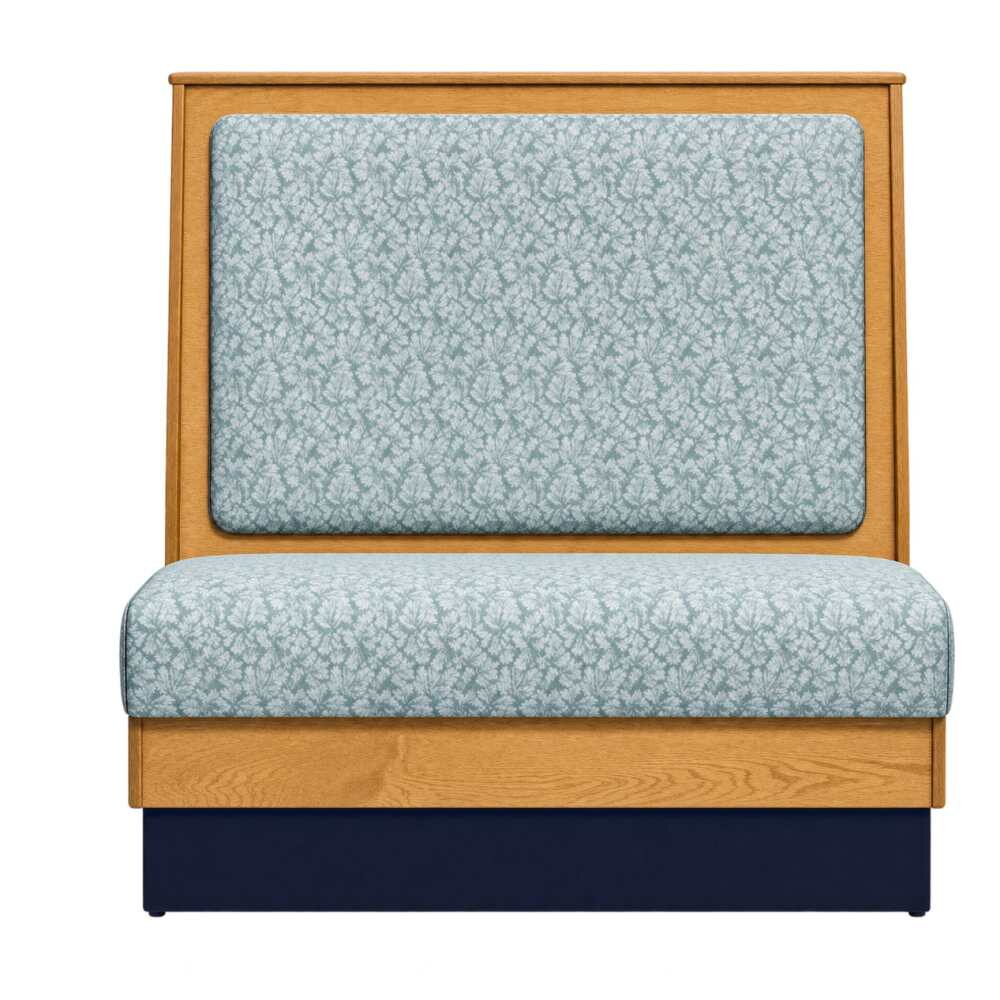
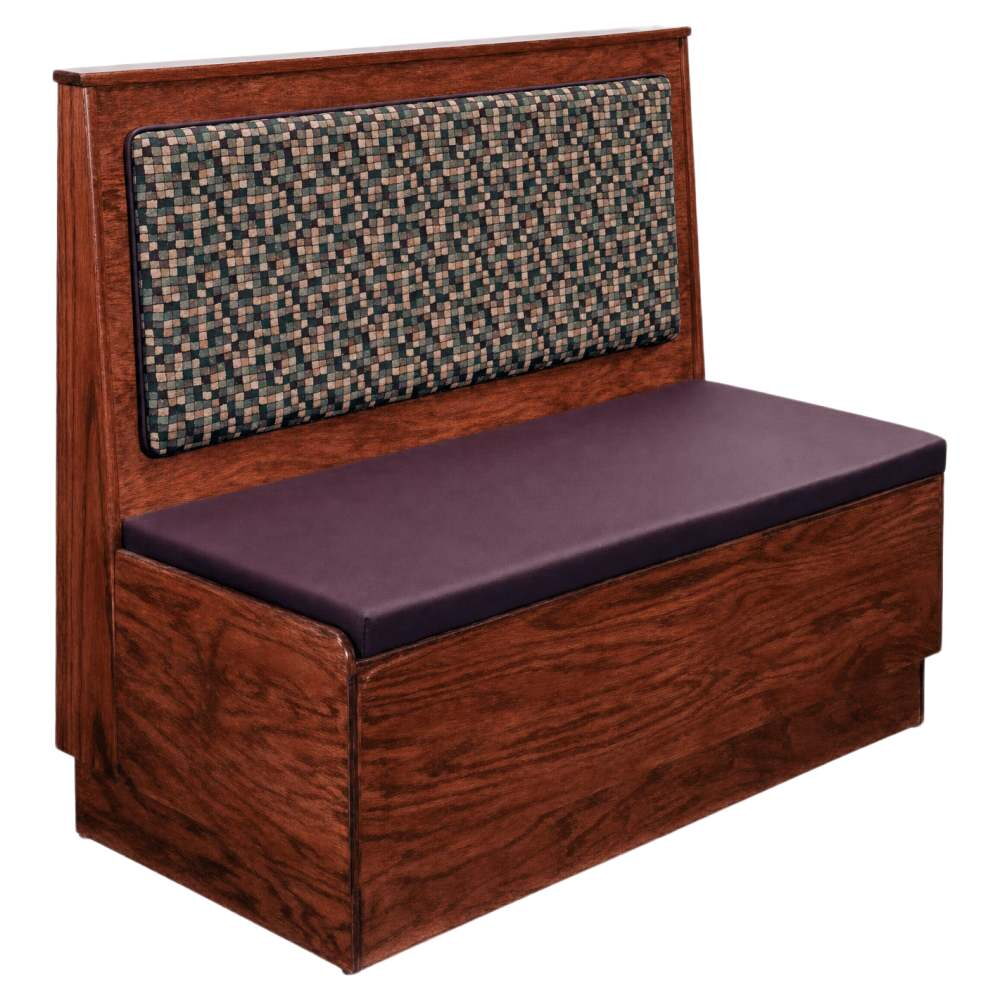
Our wood booths run from bare timber to a wood frame with a fully upholstered back. The DH style wood booth shows the whole range on one record. Its back can be plain wood with no upholstery, semi padded with vinyl or fabric set into the wood, or fully padded in vinyl or fabric. The seat is padded vinyl, the base is wood, and the frame comes in eleven finishes, at 36, 42 or 48 inches high.
For a room that wants wood all the way down, the solid wood booth lists a wood seat as well as a padded vinyl one, and a back in plain wood or semi padded. Seven frame finishes are offered, from natural through walnut and mahogany to black.
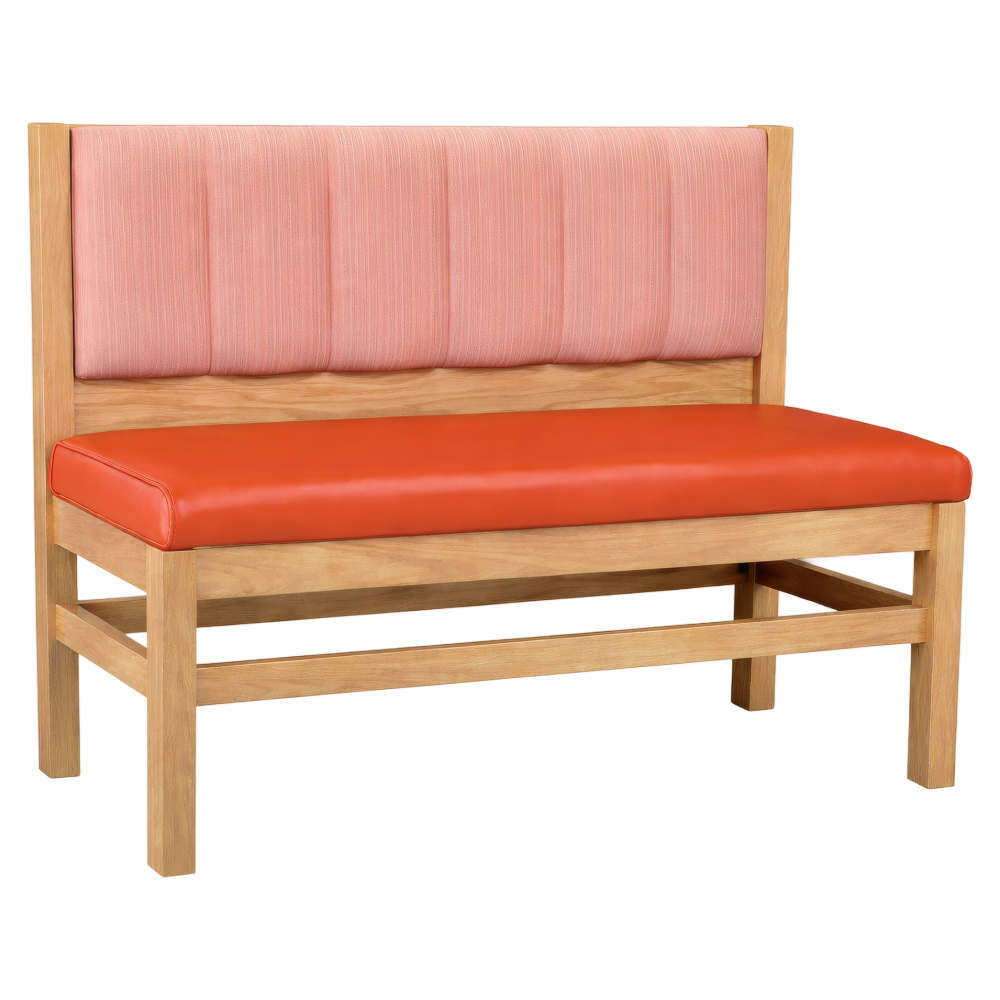
The wood platform booth carries the same choice of backs on a wood base. And a different take on the material, the slatted metal booth seating sets a slatted wood back on metal legs, with either a wood or padded vinyl seat and eight wood finishes to pick from.
Rooms where wood earns its place
A taproom is the plainest case. Guests come in groups, stay for a round or three, and leave; spills are part of the evening. A bare wood back and seat suit that rhythm, and they match the timber on the bar and the tables. Staff can clear a wood booth with one cloth on the way back to the bar, which matters when the same two people run the floor all night.
Diners and casual dining rooms sit in the middle. Breakfast is quick, dinner a little slower. A semi padded back on a wood frame with a padded vinyl seat gives some give where the shoulders rest, keeps the wood on show, and still wipes down between turns.
Then there are rooms where upholstery does better. Where the longest sitting is two hours, a fully padded back is kinder. You can keep the wood frame for the look and pad the back fully, or move over to the upholstered booths and let fabric or vinyl carry the room. The padded standard booths sit there too, on kick bases or legs.
Our rule for any venue: match the booth to the longest sitting the room serves, not the average one.
A taproom wall worked through
Take a taproom with one 36 foot wall for booths, which is 432 inches. Use the slatted metal booth seating, whose record puts the single's depth at 23 3/4 inches and the double's at 43 1/2.
Two singles at the ends use 47 1/2 inches. Four doubles in between use 174. Five tables at 30 inches each, one per bay, use 150. That is 371 1/2 inches in all, and five bays of four guests apiece seat 20, with each 48 inch seat holding two at 24 inches.
The 60 1/2 inches left over gives the end of the run a 36 inch aisle and a little more. Had the room wanted a fifth double, the run would grow by 73 1/2 inches and overshoot the wall, so four is the number.
One venue, two kinds of booth
Most of the venues we furnish have more than one room, and the booths don't have to match from room to room. Think of a brewery with a taproom at the front and a quieter dining room behind it. The taproom takes bare wood, because the evening is loud and wet and short. The dining room behind it takes the same booth with a fully padded back in a vinyl that picks up the wood tone, so the two rooms read as one house.
Because the DH style record covers bare, semi padded and fully padded backs on one frame, the change between rooms can be the back alone. The frame finish, the height and the base stay the same, and a guest walking from one room to the next sees continuity rather than two unrelated sets of furniture. Write each room's back choice as its own line in the order, since two configurations of one booth are two lines.
The same idea works inside a single room. Put bare wood on the wall near the bar, where the turns are fastest, and padded backs on the far wall, where couples settle in for dinner.
The finish mistake
Wood finishes look different on a screen than they do beside your bar top in daylight. The mistake is picking walnut from a photo and discovering on delivery day that it reads red next to the existing oak. Ask for a wood stain and finish sample from samples instead; they cost nothing and go out by UPS Ground, two to three business days on the road in most cases. For an addition to booths you already have, ask for a fresh sample even if you know the finish name, since finish lists change over time.
Care, warranty and the order
Clean with what the finish allows, because damage from the wrong cleaning agent is not covered. Booths are warranted for one year, covering faults in materials and workmanship found at delivery, and with solid wood the natural movement of the timber is excluded. The details are on our warranty page.
Booths sit outside the eight piece minimum, so a taproom can order its wall without the loose tables. Save the wall in venue plans with the finish name in the notes, and when you are ready to see how singles and doubles combine at the corners, our guide to single restaurant booths picks up there. For a banquette in wood along a dining room wall, see commercial banquette seating. Then hold the sample against the bar top at the hour you open, and decide.