House notes
Club dining chairs for members who stay through the last course
A club dining room is a slow room. Members sit down at seven, order a second bottle at nine and are still talking over coffee when the staff start resetting the bar. Members notice a wobbling table before they notice the menu, and they notice a hard chair before the wine arrives.
So we furnish a club dining room for the long dinner, not the quick one. That comes down to three choices: what the seat and back are made of, where the arms go, and how the room will look when you add to it in three years.

Open diagram at full size (new tab) ↗
Read the diagram in text
A stack of three cards for a club dining room: padded seat and back, armchairs where the floor allows, and a fresh swatch for every reorder. A side panel works through one 30 by 72 inch table: three armless chairs per long side at 24 inches each, an armchair at each end, eight covers.
- CLUB ROOM NOTES
- Padded seat and back: Fabric or vinyl, chosen per room
- Arms where they fit: About 22 inches wide: heads and roomy aisles
- Swatch every reorder: Color lists change, so confirm first
- One table of eight
- 30 by 72 inch top
- 3 side chairs per long side
- 1 armchair at each end
- Eight tables of eight: 64 covers, 16 armchairs.
- Heads get the arms, long sides stay armless: one 30 by 72 inch table, eight members.
A seat and a back for three hours
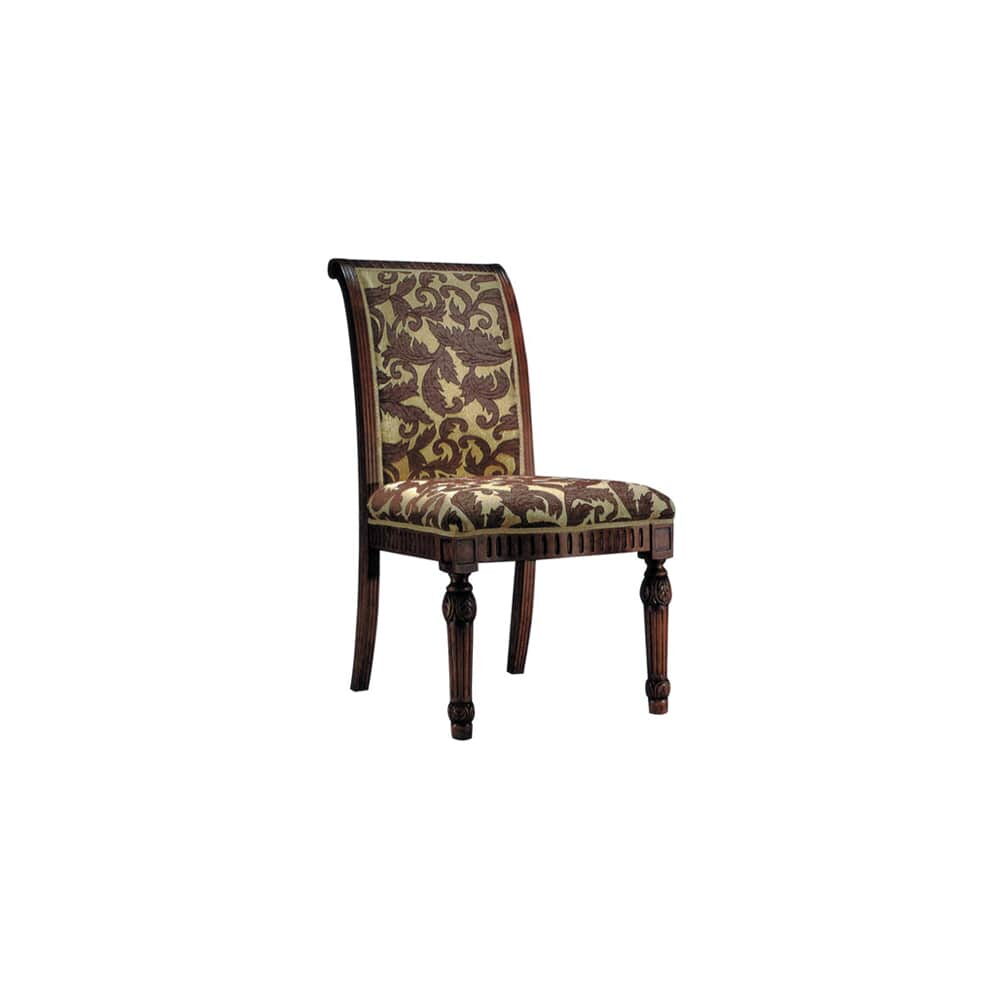
The chairs that suit a club room carry padding where the body rests: under it and behind it. Wood framing around two upholstered panels is where most club rooms start, and the upholstered-back wood chairs collect them in one place.
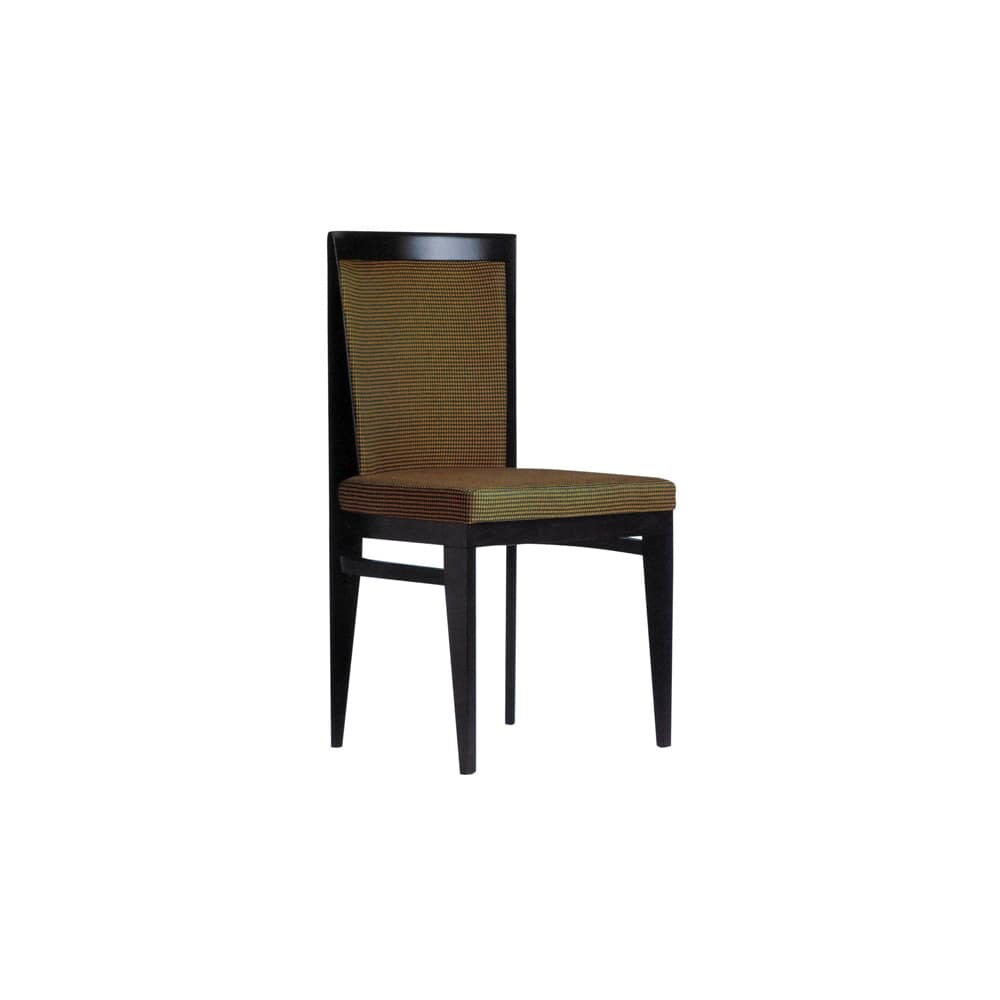
The fully upholstered wood chair is a good example of the type. Its footprint is a 22-inch square and it stands 35 inches tall, with a padded back, a choice of fabric or vinyl on the seat and eleven wood finishes on the frame. Its listing also shows BIFMA certification, which matters to boards and committees that ask for it.
Fabric or vinyl? In a club room the answer is often both. Fabric suits the main dining room, where the evening is quiet and members expect a softer chair. Vinyl suits the grill room and the terrace doorway, where spills come more often and staff wipe down between services. One chair model ordered in both, one line each, keeps the two rooms related.
Where the arms go
Arms make the long dinner easier. They also take room, and a club dining room is rarely as wide as the committee hoped.
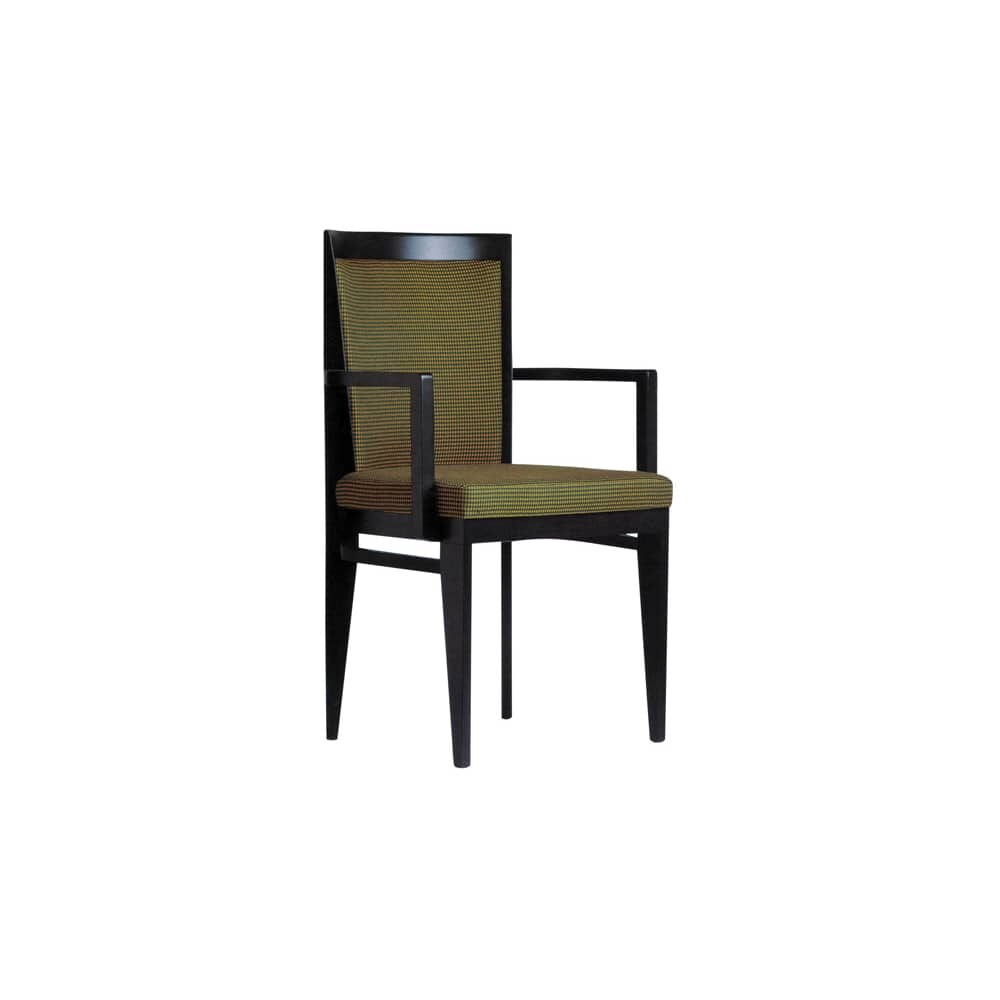
Look at the numbers before the photographs. The armchair in the fully upholstered range lists 22 inches wide; its armless partner, the fully upholstered side chair, lists 18. Give every member two feet of the table's edge, and behind each chair you need 18 to 24 inches for pulling out, plus a service aisle of about 36 inches where staff carry plates.
Here is how that plays out on a common club table. Take a 30 by 72 inch top. Each long side gives three members 24 inches apiece. Three armless chairs at 18 inches take 54 of the 72 inches and leave room to shift. Three armchairs at 22 inches take 66 inches, which fits but leaves members bumping elbows on the arms through dessert. Put the armchairs at the two ends instead, one at each 30-inch head, and the table seats eight: three, three, one and one.
Run that across the room. Eight such tables seat 64 members, and you need 16 armchairs and 48 side chairs. Order them as two lines in one finish and one upholstery, and the heads and sides will match at every table. That mix gives the host's seat at every table its arms and keeps the long sides free.
Rooms with wider aisles can take arms all round. Measure the narrowest point between two tables with the chairs pushed in, not the average across the room: the tightest gap is where a server with three plates has to pass, and it decides whether a whole row can have arms. The arm chairs include a padded-back wood chair with arms whose 20-inch depth (it is 22 1/2 inches across) is a little shallower than most, which helps where the aisle behind it is the tight one. It takes a padded vinyl or fabric back and a wood, vinyl or fabric seat, in eight wood finishes.
Fabrics, finishes and the look of the room
Most upholstered chairs in the range list a fabric line and a vinyl line by name, and a set of wood finishes from natural through walnut, mahogany and black. That gives a club room a steady base: one frame finish across the house, the upholstery color changing from room to room.
A tufted back changes the feel more than any color. The button tufted upholstered chair lists a 19-inch seat, an aluminum frame in a wood grain or powder coat finish, and padded vinyl or fabric for both seat and back, with velvet fabrics among the listed choices. It also offers front casters as a glide option, worth considering in a private dining room where the chairs move every time the table is reset.
Browse the wider upholstered chairs and the plain wood chairs side by side. A club with a casual grill and a formal dining room often wants one of each, sharing the same wood finish.
The reorder that never matches
Clubs get caught by one mistake more than any other. A room is furnished, ten years go by, a dozen chairs need replacing, and someone orders the same model in the same named color from the old invoice. The new chairs arrive a shade off, and they stand out at every table.
Upholstery and finish lists change over time. Before any addition or reorder, request free samples of the fabric or vinyl and the wood finish, hold them against a chair in the room, and confirm the color in writing before you order. We confirm a sample request by email within one business day, and the swatches go out by UPS Ground, two to three business days on the road.
Furnishing the house, one room at a time
A club rarely has one dining room. There is the main room, a grill or bar room, a private room for the board, a terrace in season. Give each its own plan in venue plans, with the chair, the finish and the upholstery noted per room, so the house reads as one even when the chairs differ.
For the rooms around the dining room, our guides to high-back restaurant chairs and senior living dining chairs cover chairs for a quieter or older membership, and club bar stools picks up where members wait for their table. Start with the table drawing, though: count the heads at each table, mark them for armchairs, and the rest of the order follows from that count.